The Investment Mistakes That Don't Appear Until It's Too Late

The Investment Mistakes That Don't Appear Until It's Too Late
For years, property investment mistakes were obvious.
Overpaying.
Choosing the wrong location.
Underestimating refurbishment costs.
Understanding Structural Weaknesses in Property Investment
Today's mistakes are different.
They don't appear at acquisition.
They don't show up in headline yield.
And they rarely become visible until refinancing, compliance pressure, or liquidity stress forces a decision.
Across the UK market, a growing number of investors are discovering that portfolio risk is no longer driven primarily by house prices or rental demand. It is driven by timing, leverage, documentation quality, and the ability to maintain flexibility when refinancing conditions tighten.
This shift is subtle — but profound.
A property can remain fully tenanted, generate positive cash flow, and still become strategically vulnerable if refinancing capacity falls, operating costs drift upward, or exit timing becomes uncertain.
The result is a new category of investment pitfall: structural weaknesses that accumulate quietly before becoming financially consequential.
Liquidity Assumptions Are Proving Optimistic
Many investors hold substantial nominal equity yet limited accessible liquidity. This distinction becomes critical during refinancing events, and it is more common than most investors recognise.
Equity tied to property value cannot absorb short-term affordability gaps, capital expenditure requirements, or delays in refinancing completion. Liquidity — cash or near-cash resources — determines whether an investor retains optionality when refinancing conditions tighten. An investor with £500,000 of notional equity across a leveraged portfolio but only £15,000 of accessible cash has effectively no buffer against a refinancing shortfall, a compliance upgrade, or a double void.
Liquidity pressure most commonly appears when modest valuation softening increases loan-to-value ratios beyond pricing thresholds, when affordability calculations reduce borrowing capacity below the existing loan balance, when compliance upgrades coincide with refinancing timelines, or when void periods extend unexpectedly during rate transition windows. A valuation decline of just 5% can move a property financed at 75% LTV close to or beyond key lender pricing thresholds, materially increasing refinancing cost or limiting product availability.
Investors often discover that their portfolios are asset-rich but liquidity-constrained at precisely the moment when liquidity matters most, forcing reactive decisions such as accepting suboptimal mortgage terms, injecting capital at short notice, or disposing of assets under time pressure rather than strategic choice.
Yield Calculations Are Being Eroded by Cost Drift
Yield calculations that appeared robust at acquisition are being systematically eroded by operating cost drift that many investors failed to model adequately. This erosion compounds quietly and often goes unnoticed until refinancing reveals the compressed margins.
The most common sources of yield erosion include compliance upgrades that were not anticipated at acquisition, insurance premium increases that reflect changing market conditions, management fee structures that scale with rent but not with value, and maintenance costs that rise faster than inflation due to aging building systems and regulatory requirements. A compliance upgrade that costs £8,000 might reduce the yield on a £400,000 property by 0.5% — a material change that can affect refinancing assessments.
What makes yield erosion particularly dangerous is that it happens gradually and often appears justified when each individual expense is considered. However, the cumulative effect can be substantial, particularly for portfolios acquired during the low-rate period when investors focused on growth rather than operational efficiency. The result is that properties that appeared to generate attractive yields at acquisition may produce marginal returns after accounting for full current costs.
Cost drift compounding example
Investor decision implication: Investors should model yield erosion scenarios when planning acquisitions and maintain reserves to absorb unexpected cost increases. Regular review of operating costs against budget assumptions can identify negative trends before they become material.
Refinancing Is Evolving Into Full Portfolio Reassessment
Refinancing is no longer a routine product switch — it is evolving into a full reassessment of investor resilience rather than a simple renewal process. This fundamental change means that investors who passed underwriting comfortably several years ago may find themselves facing much stricter standards today.
The shift reflects broader changes in the lending environment. During the ultra-low-rate period, underwriting was relatively straightforward and focused primarily on individual property metrics. Today, lenders are increasingly conducting comprehensive portfolio reviews that consider aggregate leverage, total debt service capacity, geographic concentration, and the borrower's overall financial resilience. This means that refinancing decisions are increasingly influenced by factors that extend beyond the individual property being refinanced.
Portfolio-level underwriting creates several new risk exposures. A weakness in one asset — a compliance issue, a void, a valuation shortfall — can influence the terms available on an entirely separate property within the same borrower's portfolio. Lenders are increasingly re-underwriting landlords, not just properties, which means that operational quality, documentation standards, and portfolio management practices now directly affect financing terms.
The practical implication is that investors must manage portfolio health as an integrated system rather than a collection of independent assets. Weaknesses in one area can create financing constraints across the entire portfolio, making proactive risk management essential for maintaining refinancing flexibility.
The Divergence in Outcomes
None of this implies widespread distress.
But it does mean outcomes are diverging.
Some investors are refinancing smoothly, maintaining flexibility and continuing to expand. Others are encountering constraints that force capital injections, asset sales, or acceptance of weaker lending terms.
The difference rarely comes down to market timing.
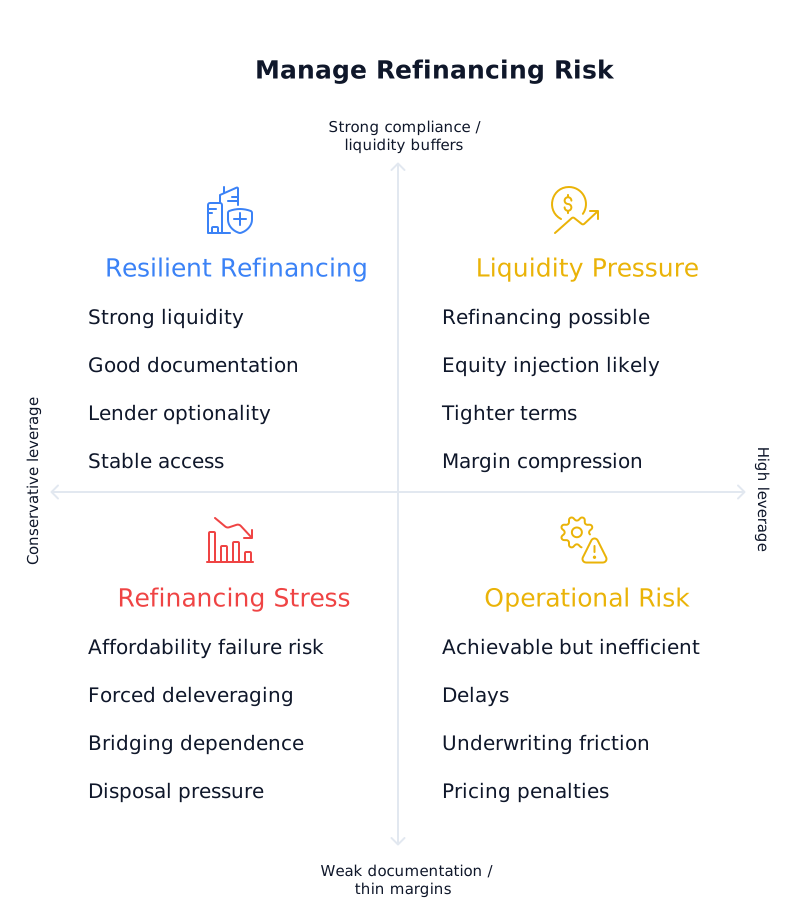
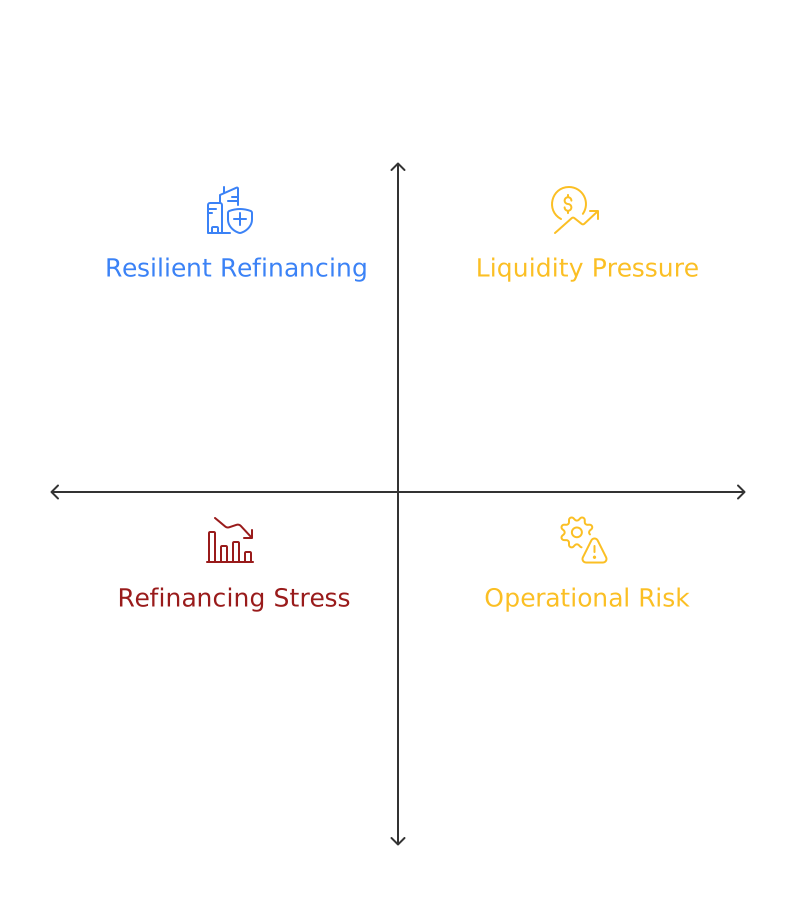
Portfolio outcomes are increasingly shaped by leverage and operational discipline rather than market direction alone. Refinancing resilience now reflects preparation, not just property selection.
It comes down to preparation.
Understanding these emerging pitfalls — and recognising them early — is now one of the most important advantages an investor can develop.
Strategic Adjustments to Mitigate Structural Weaknesses
Early refinancing preparation is essential for preserving optionality. Initiating discussions well before maturity — ideally six months or more — expands available options and reduces the time pressure that constrains negotiating position. This approach allows investors to explore multiple lender options, address documentation gaps proactively, and avoid the premium that last-minute refinancing typically commands.
Liquidity prioritisation strengthens negotiating position and reduces reactive decision-making. Maintaining accessible reserves improves negotiation power and reduces the likelihood of being forced into suboptimal decisions by short-term cash constraints. Cash buffers provide the flexibility to wait for better terms, fund unexpected compliance requirements, or bridge temporary void periods without compromising strategic objectives.
Yield stress testing reveals hidden vulnerabilities in investment assumptions. Investors should model scenarios where operating costs increase by 10-20% and assess whether properties would still meet investment criteria. This forward-looking approach helps identify assets that are most vulnerable to cost drift and allows proactive management before margins become critically compressed.
Documentation discipline prevents avoidable underwriting delays and demonstrates operational quality. Keeping refinance-ready compliance records prevents avoidable underwriting delays and demonstrates operational quality to lenders assessing borrower credibility. Complete, organised documentation signals professionalism and can influence lender perception of borrower reliability.
Portfolio-level review reveals hidden risks that individual asset analysis misses. Assessing assets collectively rather than individually identifies hidden concentration, affordability risk, and the potential for portfolio contagion effects during refinancing. This holistic view helps investors understand how stress in one property might affect financing terms across the entire portfolio.
Conclusion
UK residential property investment is not becoming inherently less attractive — but it is becoming more operationally demanding. The most consequential mistakes are no longer visible at acquisition. They emerge through refinancing cycles, compliance expectations, liquidity management, and cost drift.
Success in the coming cycle will depend less on predicting market direction and more on maintaining flexibility when conditions evolve. Investors who treat property as a regulated, capital-managed business rather than a passive asset class are more likely to retain control over timing, leverage, and strategic choice.
For a deeper analysis of specific risks emerging in the current market, including the refinancing cycle and regulatory changes affecting investors in 2026, read our comprehensive Investment Pitfalls UK Property Investors Are Underestimating in 2026.
Frequently Asked Questions
What are structural weaknesses in property investment?
Structural weaknesses are issues that accumulate quietly over time and only become visible during stress events like refinancing, compliance pressure, or liquidity constraints. Unlike obvious mistakes such as overpaying or poor location selection, these weaknesses emerge through gradual cost drift, optimistic liquidity assumptions, and changes in lending standards. Use our Rental Yield Calculator to model scenarios that might reveal hidden vulnerabilities.
How can I identify if my portfolio has liquidity issues?
Key indicators include having less than 3-6 months of mortgage payments in accessible cash, high loan-to-value ratios that would trigger pricing increases with modest valuation declines, and multiple refinancing dates clustered within a short period. Investors should stress-test their portfolios against current lending standards rather than the standards that applied when properties were originally acquired.
What is causing yield erosion in property investments?
Yield erosion is primarily driven by operating cost drift including compliance upgrades, insurance premium increases, maintenance cost inflation, and management fee structures. These costs often rise faster than rental income and can gradually compress margins. Investors should model potential cost increases and maintain reserves to absorb unexpected expenses. Our yield benchmarks guide provides reference points for realistic cost assumptions.
How has refinancing changed for property investors?
Refinancing has evolved from a simple product renewal to a comprehensive portfolio reassessment. Lenders now conduct portfolio-level underwriting that considers aggregate leverage, geographic concentration, and total debt service capacity. This means weaknesses in one property can affect financing terms across the entire portfolio. For specific analysis of current refinancing challenges, see our 2026 Investment Pitfalls analysis.
How far in advance should I prepare for refinancing?
Investors should begin refinancing preparation at least six months before maturity dates. This timeline allows for comprehensive documentation preparation, multiple lender discussions, and addressing any potential issues that emerge during underwriting. Early engagement preserves negotiating power and reduces the likelihood of accepting suboptimal terms due to time pressure.
What documentation do lenders now require for refinancing?
Lenders increasingly require comprehensive portfolio documentation including rent rolls for all properties, compliance certificates, financial statements, tax returns, and evidence of liquidity reserves. Documentation quality and completeness can influence lender perception of borrower credibility and affect financing terms. Investors should maintain refinance-ready documentation systems rather than preparing documents reactively.
How much liquidity should property investors maintain?
While specific needs vary by portfolio size and structure, investors should generally maintain 3-6 months of total mortgage payments in accessible cash reserves. This provides flexibility to handle unexpected voids, compliance requirements, or refinancing shortfalls without being forced into reactive decisions. The exact amount should be determined through stress testing against various scenarios.
Stay Updated
Subscribe to our weekly briefings for curated property news and insights
Further Reading
- Spring Statement 2026: What Changed (and What Didn't) for UK Property Investors
- Refinancing Risk Is Quietly Replacing Interest Rate Risk for UK Property Investors
- UK Property Is Entering the Execution Risk Era — What Investors Should Pay Attention To Now
- Budget 2025: What It Means for UK Property Investors & Landlords
- This Week in UK Property: Ground Rent Reform Moves Closer, While Investors Reprice Risk
- New: Compare Your UK Property Tax Across Multiple Tax Years (2025–2027)
- Budget 2025: What Do the New Tax Rules Mean For You as a Property Investor?
- Heading Into 2026: What UK Property Investors Should Actually Prepare For
- Post-Budget UK Property Market Reality Check: Rates, Rents and Risks for 2026
- What Property Investors Should Pay Attention To This Week (Dec 12)
- Budget 2025: Tougher Taxes, Smarter Investors — Why I'm Still Bullish on UK Property