Investment Pitfalls UK Property Investors Are Underestimating in 2026

Investment Pitfalls UK Property Investors Are Underestimating in 2026
A Structural Risk Guide for Residential Real Estate Investors
Around 1.8 million fixed-rate mortgages are due to reset across the UK housing market by the end of 2027, creating a refinancing cycle that will quietly reshape investor outcomes. This is not a forecast of crisis. Prices may remain broadly stable. Rental demand may stay strong. Yet a growing number of investors are discovering that portfolio stress does not begin with falling values — it begins with timing mismatches, refinancing constraints, regulatory friction, and liquidity assumptions that no longer hold.
For much of the previous decade, property investment mistakes were visible: overpaying, misjudging location, or underestimating renovation costs. Today's pitfalls are structurally different. They emerge slowly through refinancing gaps, compliance exposure, weak documentation, yield overestimation, and exit timing uncertainty. These issues rarely appear dramatic at first — but when combined, they can materially alter portfolio resilience.
Industry estimates from lenders and the UK Finance indicate that mortgage maturities remain highly clustered between 2025 and 2027, reflecting the surge in fixed-rate borrowing during the ultra-low-rate period.
Investment risk is moving away from market selection and toward operational execution. This is the defining shift of the current cycle. The investors most likely to encounter stress are not those who bought the wrong properties — they are those who financed, structured, and administered their portfolios under assumptions the market no longer supports.
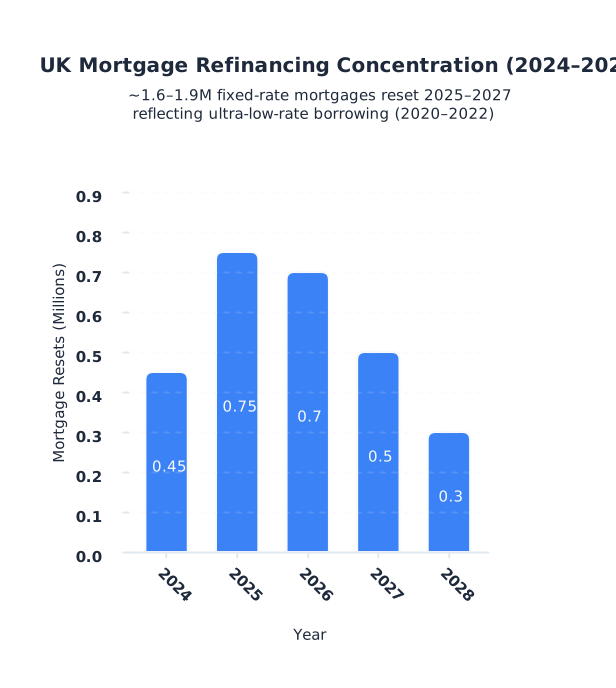
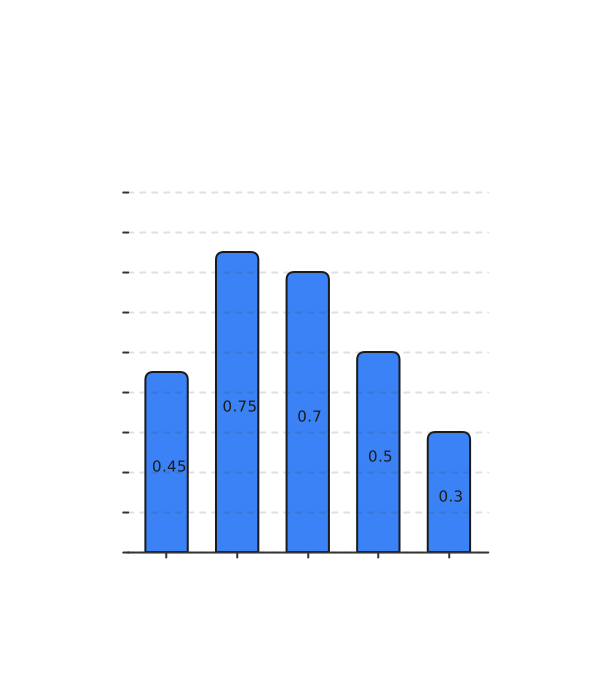
Refinancing pressure is primarily timing-driven. The concentration of fixed-rate maturities between 2025–2027 is reshaping liquidity and underwriting dynamics across investor portfolios.
This article examines the most consequential pitfalls currently affecting UK residential property investors and provides a framework for identifying vulnerabilities before they translate into financial pressure.
Executive Summary
The UK residential investment environment is undergoing structural change driven by refinancing concentration, tighter underwriting, and expanding regulatory oversight. A large cluster of mortgage maturities is resetting under stricter affordability tests while lenders increase their focus on borrower quality and portfolio resilience. Simultaneously, growing compliance obligations and enforcement exposure are raising operating costs and compressing effective yields, and reduced certainty around exit timing following possession reform is narrowing the strategic options available to leveraged investors.
These forces interact rather than operate independently. Refinancing affects liquidity. Liquidity affects exit flexibility. Compliance influences lender confidence. Exit uncertainty alters leverage tolerance. The compounding nature of these interactions means that moderate pressure across several dimensions can produce more severe outcomes than acute pressure in any single area.
Investors who continue to rely on assumptions formed during the ultra-low-rate environment may encounter avoidable stress. Investors who adapt their capital structure, documentation standards, and liquidity planning are more likely to maintain strategic flexibility through what is increasingly a differentiation cycle rather than a market downturn.
1. The Assumption That Refinancing Is Routine
Refinancing risk is the risk that portfolio financing cannot be replaced on acceptable terms at mortgage maturity. Unlike interest rate risk, which assumes financing remains available at a different price, refinancing risk questions whether financing will be available at all — or whether the terms imposed will force structural changes to how a portfolio operates.
Historically, refinancing was treated as an administrative step — a product switch driven primarily by rate comparison. That assumption is weakening rapidly.
Loans originated between 2019 and 2022 were underwritten during exceptionally low borrowing costs and generous affordability modelling. Stress testing that previously assumed effective rates near 3–4% now frequently operates in the 6–8% range, reducing borrowing capacity even where rental income has grown. As these loans mature, investors face a lending environment shaped by higher stress rates, stricter portfolio underwriting, and increased scrutiny of borrower management quality.
The refinancing process is therefore evolving from a simple rate negotiation into a full reassessment of the investment model. A borrower who previously qualified comfortably may now encounter reduced borrowing capacity, additional capital injection requirements, longer application timelines, and materially increased documentation scrutiny. The practical gap between a routine product switch and a contested refinancing application has widened significantly.
The risk is not widespread refinancing failure — but a growing divergence between portfolios that refinance smoothly and those that encounter friction. For a detailed analysis of the refinancing wave's scale and structural dynamics, see our companion article on the structural risk investors are underestimating in the UK buy-to-let refinancing wave.
Key takeaways for property investors
Investor decision implication: Investors with maturities within the next 24 months should model refinancing outcomes under current stress rates — not the rates at which the original loan was underwritten. Where affordability tightens materially, early engagement with lenders or brokers preserves the widest range of responses.
2. Liquidity Buffers That Exist Only on Paper
Many investors hold substantial nominal equity yet limited accessible liquidity. This distinction becomes critical during refinancing events, and it is more common than most investors recognise.
Equity tied to property value cannot absorb short-term affordability gaps, capital expenditure requirements, or delays in refinancing completion. Liquidity — cash or near-cash resources — determines whether an investor retains optionality when refinancing conditions tighten. An investor with £500,000 of notional equity across a leveraged portfolio but only £15,000 of accessible cash has effectively no buffer against a refinancing shortfall, a compliance upgrade, or a double void.
Liquidity pressure most commonly appears when modest valuation softening increases loan-to-value ratios beyond pricing thresholds, when affordability calculations reduce borrowing capacity below the existing loan balance, when compliance upgrades coincide with refinancing timelines, or when void periods extend unexpectedly during rate transition windows. A valuation decline of just 5% can move a property financed at 75% LTV close to or beyond key lender pricing thresholds, materially increasing refinancing cost or limiting product availability.
Investors often discover that their portfolios are asset-rich but liquidity-constrained at precisely the moment when liquidity matters most, forcing reactive decisions such as accepting suboptimal mortgage terms, injecting capital at short notice, or disposing of assets under time pressure rather than strategic choice.
Investor decision implication: Liquidity adequacy should be stress-tested against a simultaneous refinancing shortfall and void scenario, not against normal operating conditions. The question is not whether cash reserves exist — it is whether they survive a coincidence of pressures.
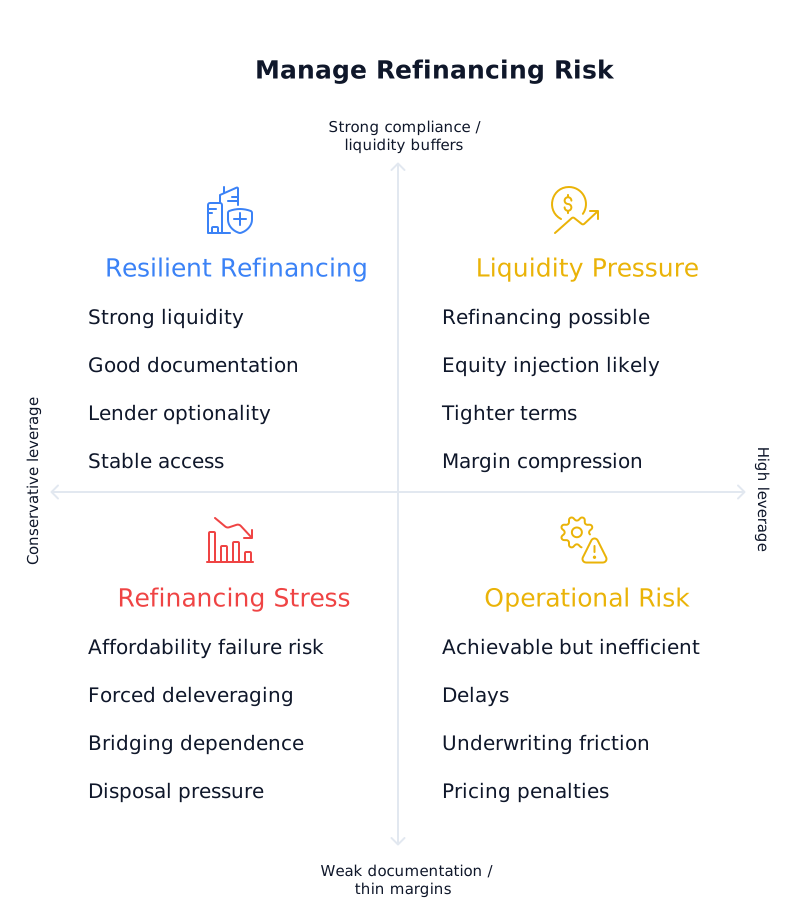
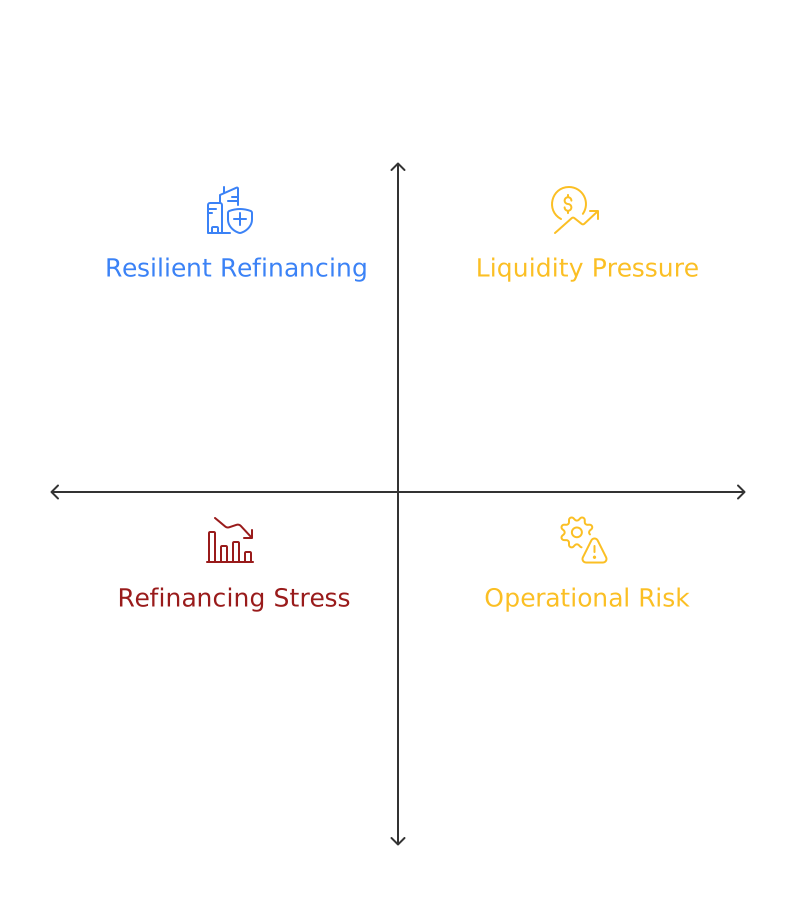
Portfolio outcomes are increasingly shaped by leverage and operational discipline rather than market direction alone. Refinancing resilience now reflects preparation, not just property selection.
3. Yield Calculations That Ignore Structural Cost Drift
Headline yield remains one of the most widely used metrics in property investment — and one of the most misleading when structural costs are changing beneath the surface.
The danger is not that any single cost has increased dramatically. It is that multiple cost categories have drifted upward simultaneously, and their cumulative effect is compressing the surplus income available to service debt. Licensing expansion, compliance and safety standards, insurance repricing, maintenance inflation driven by labour and materials costs, and the growing expectation of professional management all contribute to what amounts to a structural uplift in the cost of operating a rental property. Licensing, compliance and maintenance cost increases can reduce net rental surplus by hundreds of pounds per property annually, eroding debt-service coverage even without interest rate changes.
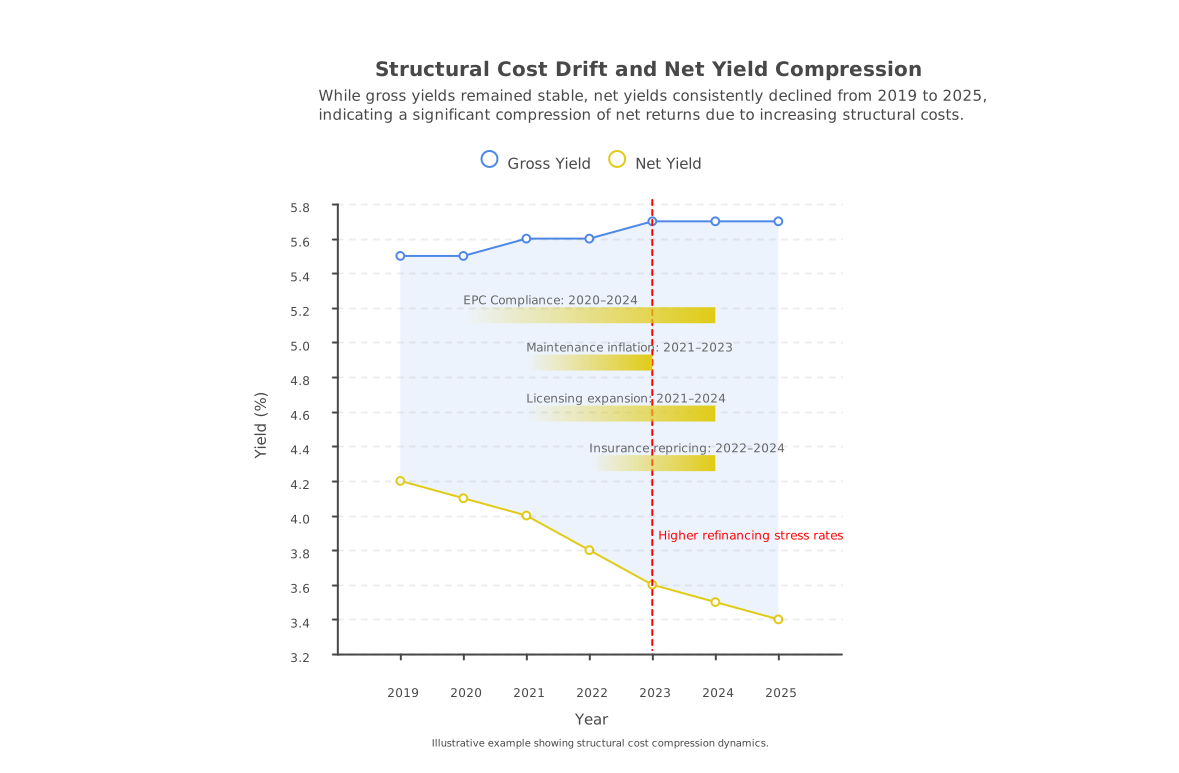
Operating cost inflation and stricter stress testing reduce refinancing headroom long before investors experience overt financial pressure.
This matters because yield calculations formed during 2019–2022 embedded cost assumptions that have since shifted. An investor who modelled a property at 6.5% gross yield with operating costs at 25% of gross rent may find that current operating reality produces costs closer to 32–35% — a shift that does not make the property unprofitable but removes the margin of safety that absorbs refinancing stress or void periods.
The compounding effect is what makes this pitfall dangerous. Each cost increase is individually manageable. But when insurance reprices by 15%, licensing fees increase, EPC upgrade costs materialise, and maintenance inflation runs above general CPI, the aggregate effect on debt-service coverage ratios can be the difference between a comfortable refinancing and a constrained one.
Critically, this cost drift also interacts with refinancing. Lenders assessing affordability at application will use current operating cost assumptions, not the investor's historic figures. A property that appeared comfortably serviceable under the original cost model may fail updated affordability tests even though the rent has increased.
Operating cost drift impact example
For detailed cost benchmarks to support yield modelling, see our UK rental property cost benchmarks guide.
Investor decision implication: Yield modelling should be forward-looking, incorporating current cost benchmarks rather than historic actuals. Investors relying on figures from their original acquisition appraisal are likely understating operating cost reality by a material margin.
4. Exit Timing Misjudged as a Controllable Variable
Many investors treat property disposal as a decision they can execute within predictable timelines. Recent regulatory reform challenges that assumption fundamentally, and the implications extend well beyond possession proceedings into refinancing strategy, lender confidence, and portfolio liquidity.
The transition away from discretionary possession routes under the Renters' Rights Act 2025 introduces greater procedural dependency and increases reliance on statutory grounds and court processes. Section 21 "no-fault" evictions have been abolished. All possession claims now require a statutory ground, supported by evidence, processed through a court system that is itself under capacity pressure.
County court processing delays reported by HM Courts & Tribunals Service mean that possession timing can vary significantly by region. What was previously a 2–3 month process in straightforward cases may now extend to 6–12 months or longer where grounds are contested, documentation is incomplete, or courts are backlogged. This variability is not uniform — it depends on the specific court, the complexity of the case, tenant engagement, and whether the landlord's documentation meets evidential thresholds without challenge.
The interaction between exit timing uncertainty and refinancing is particularly consequential. An investor approaching a mortgage maturity who needs to dispose of an asset to release capital may find that the disposal timeline exceeds the refinancing window. This creates a compounding pressure: the investor cannot refinance because the asset needs to be sold, but the asset cannot be sold quickly because possession is procedurally constrained. In these scenarios, bridging finance may become necessary — but bridging rates are materially higher than term mortgage rates, and the exit strategy must be clearly defined before entry.
Lenders are also increasingly aware that collateral recovery timelines have lengthened. This perception influences underwriting decisions, potentially tightening terms for properties where tenant-in-situ risk is perceived as higher. Exit timing uncertainty is therefore not merely an operational inconvenience — it is a financial variable that feeds back into lending terms, leverage capacity, and portfolio valuation.
For a comprehensive analysis of how the Renters' Rights Act reshapes possession strategy and portfolio risk, see our detailed legal and investment analysis.
Investor decision implication: Exit timelines should be modelled as ranges, not fixed dates. Investors approaching refinancing deadlines should assess whether any disposal they may need to execute can be completed within the available window — and plan bridging or alternative financing contingencies if it cannot.
5. Overlooking Portfolio-Level Underwriting
A common and increasingly costly mistake among multi-property investors is assuming that each property will be assessed independently at refinancing. The lending market has moved decisively away from this model.
During the era of abundant credit, buy-to-let underwriting was largely asset-centric. Lenders assessed individual properties against their own rental income and valuation. A strong asset could qualify regardless of what else the borrower held. That approach suited a market where default rates were low and property values were appreciating.
The shift toward borrower-centric underwriting reflects a fundamental change in how lenders assess risk. Several lenders have tightened their treatment of portfolio-level income, applying aggregate stress tests that consider the borrower's total exposure rather than assessing each property in isolation. Where underwriting was previously focused on the individual property's rental income and value, it is increasingly incorporating total debt service obligations, vacancy exposure across properties, and the capacity to absorb shocks in one part of the portfolio without defaulting elsewhere. Lenders are increasingly re-underwriting landlords, not just properties.
This means that a weakness in one asset — a compliance issue, a void, a valuation shortfall — can influence the terms available on an entirely separate property within the same borrower's portfolio. The practical implication is what might be called portfolio contagion risk: deterioration in one holding affecting the financing conditions available across others. An investor with nine performing properties and one problematic asset may find that the problematic asset's impact on aggregate metrics — average LTV, portfolio void rate, total debt-service coverage — constrains refinancing options across the wider portfolio.
The reasons for this shift are rational from a lending perspective. The post-2022 environment demonstrated that borrower-level distress can emerge even where individual assets appear healthy, particularly when multiple maturities cluster within a short window. Lenders responded by demanding visibility into the whole picture rather than relying on property-level snapshots.
Portfolio contagion risk example
Investor decision implication: Portfolio health must be managed as an integrated system. Investors should identify any asset that could drag aggregate metrics below lender thresholds and consider whether remediation, disposal, or restructuring is warranted before it affects refinancing terms across the wider portfolio.
6. Compliance Treated as Administrative Rather Than Strategic
Compliance gaps rarely affect day-to-day rental income — which is precisely why they are underestimated. However, they can become materially significant during refinancing, enforcement action, or possession proceedings.
Lenders increasingly request comprehensive documentation covering safety certification, licensing status, tenancy records, maintenance history, and property condition evidence. Incomplete documentation can delay applications, trigger additional conditions, or reduce lender confidence at precisely the moment when an investor needs a smooth refinancing process.
More importantly, regulatory breaches may carry civil penalties that directly affect affordability modelling and investor reputation. A civil penalty issued against a landlord signals to a lender that management standards fall below acceptable thresholds, potentially triggering enhanced due diligence or adverse terms on future applications. The reputational and financial dimensions of compliance failure are converging in ways that directly affect refinancing outcomes.
Compliance therefore functions as a financial risk variable, not merely an administrative requirement. Investors who treat it as a periodic checkbox exercise rather than an ongoing operational discipline are accumulating latent risk that surfaces at the worst possible moment — during a refinancing application or a possession claim where documentary evidence is tested.
Investor decision implication: Compliance records should be maintained to a lender-ready standard at all times, not assembled retrospectively when a refinancing application is initiated. The cost of proactive compliance management is a fraction of the cost of a delayed or constrained refinancing outcome.
7. Leverage Assumptions Anchored to a Different Rate Environment
Leverage decisions made during the ultra-low-rate period often assumed persistent affordability and stable refinancing access. The adjustment to higher stress testing changes that dynamic materially.
Many lenders now apply stress rates in the 6–8% range, significantly above prevailing product rates. This means borrowing capacity can decline even if market rates stabilise or fall modestly, because the underwriting hurdle has been structurally raised. Investors operating with minimal equity buffers face reduced maximum loan sizes, higher required deposits, constrained product availability, and increased refinancing costs — not because their properties have deteriorated, but because the assessment framework has changed.
Stress testing that previously assumed effective rates near 3–4% now frequently operates in the 6–8% range, reducing borrowing capacity even where rental income has grown. This does not invalidate leveraged strategies — leverage remains a legitimate and powerful tool in property investment. But it increases the importance of maintaining headroom rather than operating at maximum permissible leverage. The investor who financed at 78% LTV under a 3.5% stress rate may find that the same property now supports only 65–70% LTV under a 7% stress rate, requiring a capital injection to maintain the existing loan balance.
To model current borrowing capacity and stress test scenarios, use our Mortgage Calculator with updated stress rate assumptions.
Investor decision implication: Leverage tolerance should be calibrated to current stress testing parameters, not to the rates at which existing loans were originated. Investors should model their maximum sustainable LTV under current lender stress rates and assess whether their existing leverage position remains within that envelope.
8. Geographic Concentration Risk Overlooked
Concentration can amplify both opportunity and vulnerability, and the risk is frequently underestimated because it manifests indirectly.
Consider an investor with six properties within a single local authority area. A decision by that authority to expand selective licensing — as many councils have done since 2023 — creates an immediate and simultaneous cost increase across the entire portfolio. Licensing fees, enhanced inspection requirements, and any remedial works required to meet licence conditions all materialise at once rather than being staggered. The investor faces a concentrated capital expenditure event that would have been absorbed gradually across a geographically diversified portfolio.
The correlation extends beyond regulatory costs. Localised demand softening — whether driven by employer relocation, infrastructure changes, or demographic shifts — can produce correlated voids across multiple properties. Where those voids coincide with a refinancing window, the combined impact on debt-service coverage is far greater than any individual vacancy would suggest.
From a lender perspective, geographic concentration is increasingly treated as a risk factor in its own right. Portfolio underwriting models that assess geographic exposure may assign higher risk weightings to concentrated holdings, limiting product availability or increasing pricing. An investor whose portfolio performs well in aggregate may still face constrained lending terms because concentration magnifies the perceived downside scenario.
Investor decision implication: Investors should assess whether their portfolio carries meaningful single-authority or single-region concentration, and whether that concentration could produce simultaneous cost or income shocks across a critical mass of holdings.
9. The BRRR Timing Trap
Value-add strategies reliant on rapid refinancing are particularly sensitive to processing delays and valuation variability. Where refinancing is delayed — whether due to lender processing times, surveyor availability, or valuation outcomes below expectation — capital recycling slows, acquisition pipelines stall, and short-term financing costs increase.
The vulnerability is not the strategy itself but its dependency on timing precision. In the current environment, where lender turnaround times have lengthened and valuation conservatism has increased, the assumption of a 6-month refurbish-and-refinance cycle may be optimistic. Investors using refurbishment-driven refinancing should incorporate contingency planning that assumes delays of 2–4 months beyond target rather than treating them as exceptional.
10. Behavioural Complacency Following Strong Performance
Perhaps the most consequential pitfall is psychological, and it affects experienced investors disproportionately.
Portfolios that have performed well historically create a form of confidence that is difficult to distinguish from evidence-based assessment. An investor whose properties have generated consistent rental income, refinanced without friction, and appreciated in value over ten or fifteen years has rational grounds for optimism. The problem is that this experience was formed during a period of structurally declining interest rates, expanding credit availability, and limited regulatory enforcement — conditions that are not repeating.
Slow structural change — regulatory expansion, underwriting evolution, operating cost drift — rarely triggers immediate behavioural adjustment. The shift from asset-centric to borrower-centric underwriting happened gradually. Licensing expansion occurred council by council. Insurance repricing accumulated year by year. No single change was dramatic enough to force a reassessment.
The danger is not that any individual pressure overwhelms the portfolio, but that multiple moderate pressures converge within a refinancing window, producing an outcome the investor did not model because each pressure appeared manageable in isolation. This is the hallmark of structural risk: it accumulates silently and surfaces abruptly.
Recognising this behavioural inertia is not an exercise in pessimism. It is the mechanism through which investors avoid reactive decision-making — the kind of decision-making that produces forced disposals, emergency capital injections, and acceptance of materially worse lending terms.
Investor decision implication: The most valuable exercise an investor can undertake is to stress-test their portfolio against current conditions rather than historic performance. If the same portfolio were acquired today, under current financing terms, regulatory requirements, and operating costs — would it still meet investment criteria?
Investor Self-Assessment Framework
Investors can evaluate exposure using two core dimensions: Liquidity & Leverage Discipline and Operational & Regulatory Readiness.
Key questions include:
- What proportion of my portfolio refinances within the next 24 months?
- Could I inject capital without asset sales if borrowing capacity falls?
- Are all compliance records immediately lender-ready?
- How long could I absorb mortgage payments without rental income?
- Does my yield remain attractive after full, current cost modelling?
Uncertainty in these areas indicates latent vulnerability rather than immediate distress — but vulnerability that compounds over time.
Strategic Adjustments to Mitigate Emerging Pitfalls
Early refinancing engagement is essential for preserving optionality. Initiating discussions well before maturity — ideally six months or more — expands available options and reduces the time pressure that constrains negotiating position. This approach allows investors to explore multiple lender options, address documentation gaps proactively, and avoid the premium that last-minute refinancing typically commands.
Liquidity prioritisation strengthens negotiating position and reduces reactive decision-making. Maintaining accessible reserves improves negotiation power and reduces the likelihood of being forced into suboptimal decisions by short-term cash constraints. Cash buffers provide the flexibility to wait for better terms, fund unexpected compliance requirements, or bridge temporary void periods without compromising strategic objectives.
Portfolio-level review reveals hidden risks that individual asset analysis misses. Assessing assets collectively rather than individually identifies hidden concentration, affordability risk, and the potential for portfolio contagion effects during refinancing. This holistic view helps investors understand how stress in one property might affect financing terms across the entire portfolio.
Documentation discipline prevents avoidable underwriting delays and demonstrates operational quality. Keeping refinance-ready compliance records prevents avoidable underwriting delays and demonstrates operational quality to lenders assessing borrower credibility. Complete, organised documentation signals professionalism and can influence lender perception of borrower reliability.
Pre-emptive asset optimisation preserves strategic control over timing and outcomes. Identifying weaker assets early — those with the thinnest margins, weakest compliance positions, or highest concentration risk — allows planned disposals or restructuring rather than reactive responses under pressure. This proactive approach prevents forced sales under time constraints and typically achieves better outcomes. For the full disposal decision framework — including CGT timing, possession constraints, and portfolio sequencing — see our Exit Strategy and Disposal Timing analysis.
Outlook — A Differentiation Cycle Rather Than a Market Shock
The emerging pitfalls do not imply systemic instability. They point toward increasing differentiation between portfolios based on liquidity discipline, operational quality, and leverage tolerance.
The refinancing cycle will differentiate resilient portfolios from those dependent on favourable conditions. Investors who adapt proactively may encounter limited disruption. Those who rely on historic assumptions may find that constraints appear simultaneously rather than sequentially — and that the window for effective response narrows as maturity dates approach.
Preparation therefore influences not just financial outcomes but the range of strategic choices available. The advantage of early action compounds: investors who address potential constraints now retain the widest range of strategic responses. Those who defer may find their options progressively narrowed.
Conclusion
UK residential property investment is not becoming inherently less attractive — but it is becoming more operationally demanding. The most consequential pitfalls are no longer visible at acquisition. They emerge through refinancing cycles, compliance expectations, liquidity management, and exit timing uncertainty.
Success in the coming cycle will depend less on predicting market direction and more on maintaining flexibility when conditions evolve. Investors who treat property as a regulated, capital-managed business rather than a passive asset class are more likely to retain control over timing, leverage, and strategic choice.
The risks are manageable. But only when they are recognised early.
Frequently Asked Questions
What is refinancing risk and how is it different from interest rate risk?
Refinancing risk is the risk that portfolio financing cannot be replaced on acceptable terms at mortgage maturity, whereas interest rate risk assumes financing remains available but at different prices. Refinancing risk questions whether financing will be available at all or whether terms will force structural changes to portfolio operations. Use our Mortgage Calculator to model refinancing scenarios under current stress rates.
How much liquidity should I maintain in my property portfolio?
Liquidity needs vary by portfolio size and leverage levels, but investors should stress-test against simultaneous refinancing shortfalls and void periods. A common guideline is maintaining cash reserves equivalent to 3-6 months of total mortgage payments across the portfolio, plus additional buffers for expected compliance costs or capital expenditures. The key is testing whether reserves survive coincident pressures rather than normal operations.
What operating costs should I include in yield calculations?
Modern yield calculations should include licensing fees, compliance costs, insurance premiums, maintenance allowances (typically 1-2% of property value annually), management fees if applicable, and allowances for void periods. Our rental property cost benchmarks provide detailed guidance on current market rates for different cost categories to support accurate yield modelling.
How does the Renters' Rights Act 2025 affect exit timing?
The Act abolishes Section 21 "no-fault" evictions and requires all possession claims to use statutory grounds with proper documentation. Court processing delays mean possession timelines can extend to 6-12 months or longer where cases are contested. This uncertainty affects refinancing planning and may require bridging finance where disposal timelines exceed mortgage maturity windows. See our comprehensive legal and investment analysis for detailed guidance.
What is portfolio underwriting and why does it matter?
Portfolio underwriting is when lenders assess a borrower's total property exposure rather than individual properties. This means weakness in one asset can affect financing terms across the entire portfolio. Lenders now consider aggregate leverage, vacancy exposure, geographic concentration, and total debt service capacity. Investors should manage portfolio health as an integrated system and address any assets that could drag aggregate metrics below lender thresholds.
How have stress testing requirements changed for property investment?
Stress testing rates have increased from 3-4% to 6-8% for affordability calculations, even when market rates are lower. This reduces borrowing capacity and may require capital injections to maintain existing loan balances. Investors should model refinancing outcomes under current stress rates rather than the rates at which original loans were underwritten. Our Mortgage Calculator can help model different stress scenarios.
What are the signs of geographic concentration risk?
Geographic concentration risk exists when multiple properties could be affected simultaneously by local authority decisions, market conditions, or regulatory changes. Signs include having multiple properties in one council area, reliance on local employment hubs, or exposure to specific local infrastructure projects. Investors should assess whether single-authority decisions could create correlated cost increases or voids across a critical mass of their portfolio.
Stay Updated
Subscribe to our weekly briefings for curated property news and insights